How to journal your forex trades effectively
A practical framework for recording setups, execution quality, and post-trade lessons.
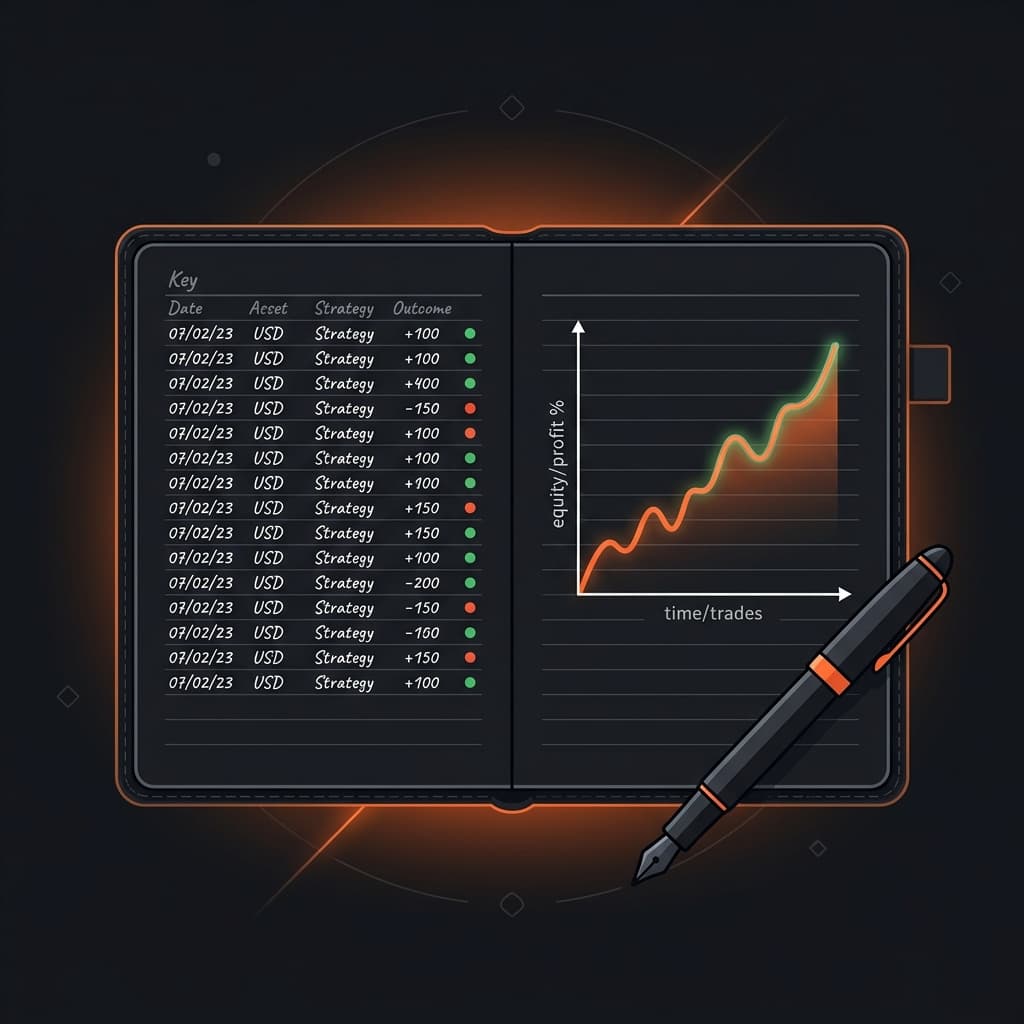
In professional trading, a journal is the single most critical tool for finding and maintaining your edge. It acts as the bridge between impulsive, adrenaline-fueled decisions and a disciplined, rule-based approach. Without a structured log of your trades, you are essentially gambling, as you cannot track what is working and what is leaking capital.
An effective forex journal must track two distinct categories: quantitative metrics and qualitative observations. Quantitative data includes the hard facts of the trade: currency pair, session (e.g., London open vs. New York lunch), position size, direction (Long/Short), exact entry and exit prices, commissions, fees, and the realized risk-to-reward ratio. This forms the mathematical baseline of your performance.
Qualitative data captures the human element of trading: your emotional state before entering (e.g., Calm, Anxious, Bored), the specific strategy trigger from your playbook, and annotations of any execution errors (such as chasing price, entering early due to FOMO, or taking profit prematurely). Correlating your mood tags with your net P&L often yields eye-opening insights into your psychological blind spots.
Finally, logging the trades is only half the battle; the real value is unlocked during the weekly review loop. Every weekend, filter your trades to isolate your highest-conviction setups and your worst-performing mistakes. By analyzing these groups side-by-side, you can formulate clear protective rules for the upcoming week and ensure your trading decisions are guided by data rather than emotion.